Key Performance Indicators (KPIs) | Operations Functions   114-slide PPT PowerPoint presentation slide deck (PPTX)
$29.00

Key Performance Indicators (KPIs) | Operations Functions (114-slide PPT PowerPoint presentation slide deck (PPTX)) Preview Image
Flevy is the marketplace for business best practices.
Key Performance Indicators (KPIs) | Operations Functions (114-slide PPT PowerPoint presentation slide deck (PPTX)) Preview Image
Arrow   Click main image to view in full screen.

Key Performance Indicators (KPIs) | Operations Functions (PowerPoint PPTX Slide Deck)

PowerPoint (PPTX) 114 Slides

$29.00
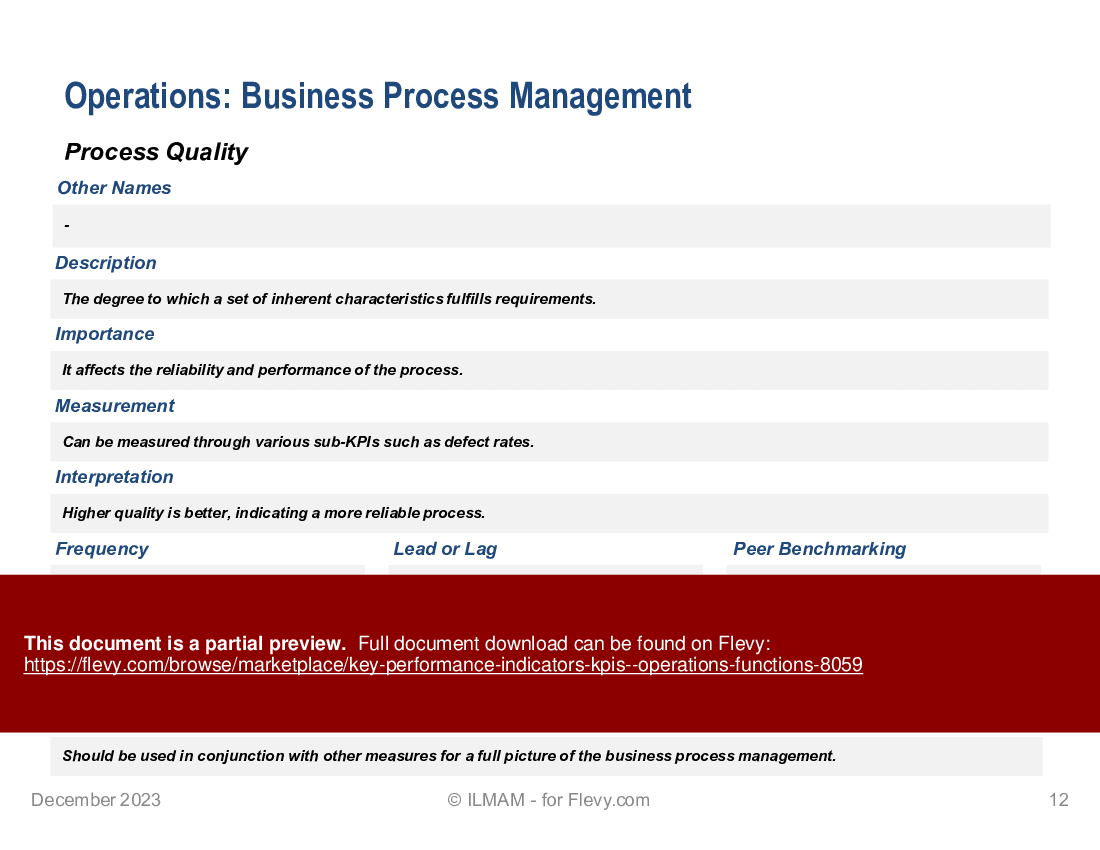
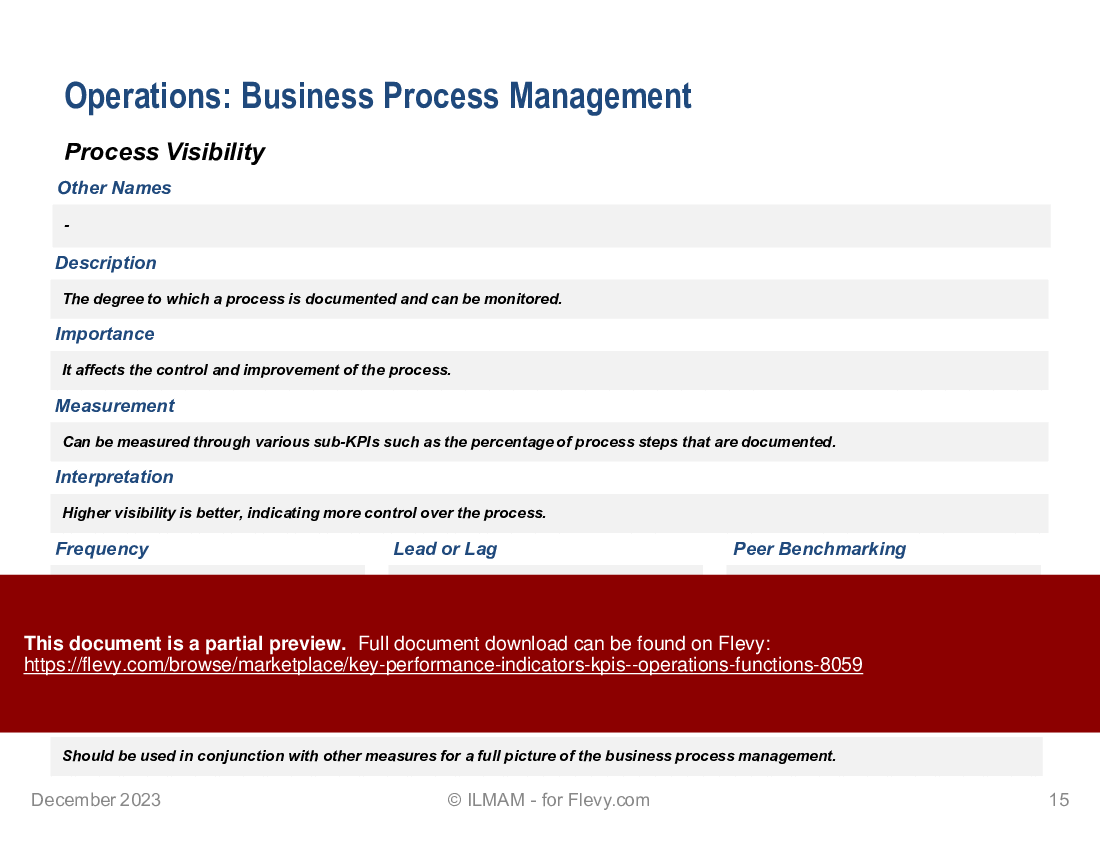
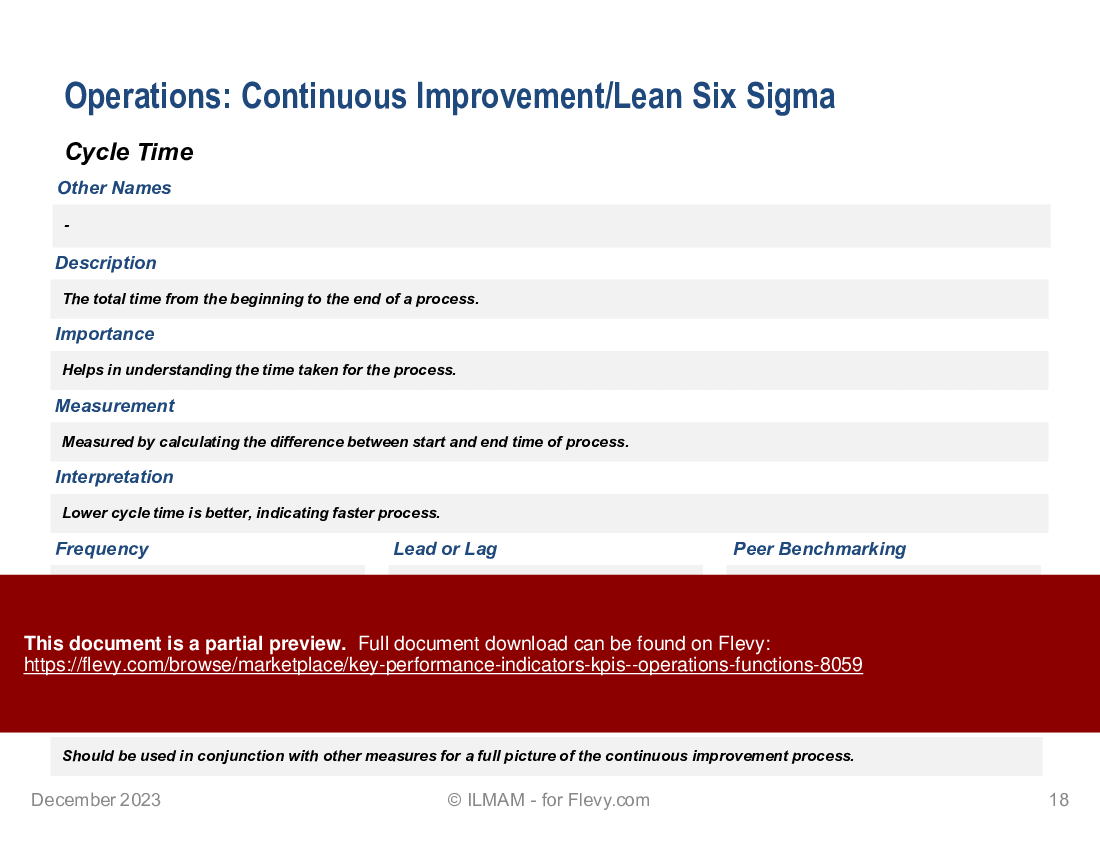
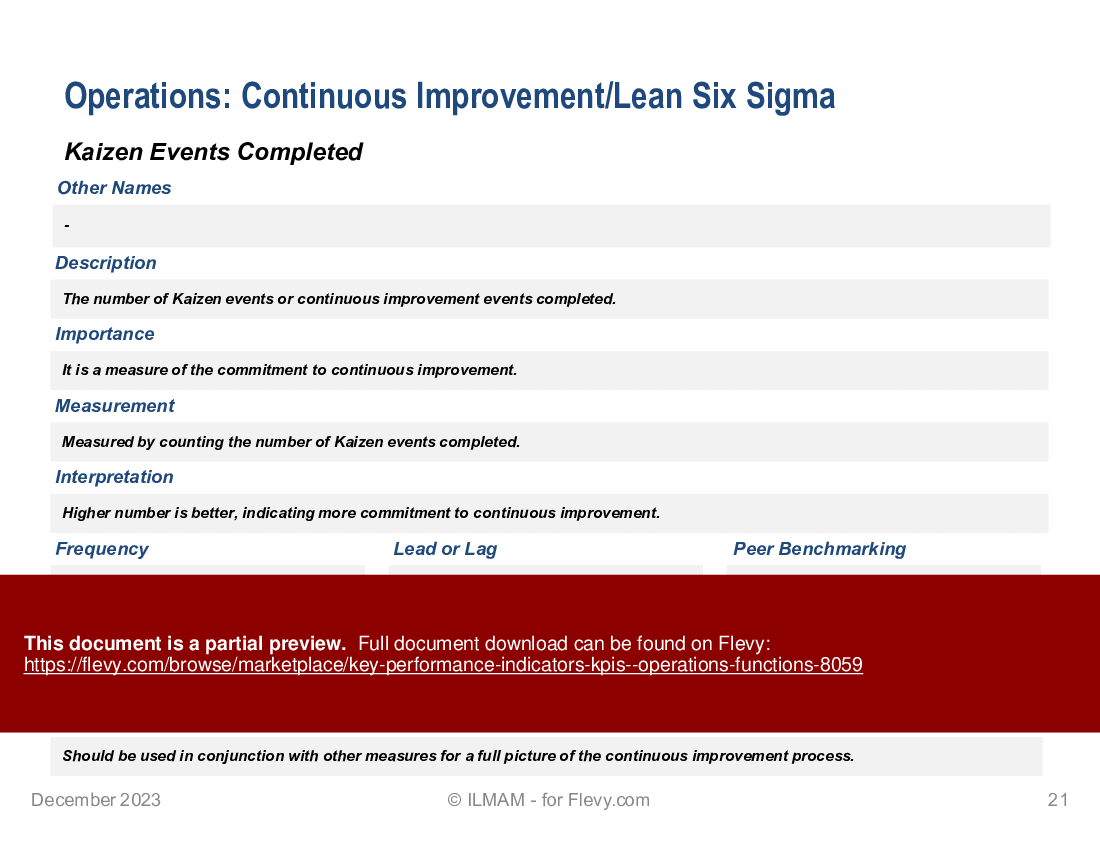
MBB/Big 4 style presentation that provides a collection of 100+ Key Performance Indicators (KPIs) related to the Operations functions.
Add to Cart


Immediate download
Free lifetime updates

BENEFITS OF THIS POWERPOINT DOCUMENT

  1. provides a structured way to track and measure the performance within an organization, enabling better decision-making and strategic planning
  2. helps identify trends in an organization's performance, which can lead to valuable insights for future decisions and actions
  3. serves as a tool that helps align all stakeholders around an organization's strategic objectives and performance expectations, fostering a culture of transparency and accountability

KEY PERFORMANCE INDICATORS PPT DESCRIPTION

Editor Summary 114-slide PowerPoint presentation compiling over 100 Key Performance Indicators (KPIs) for Operations functions, developed by ILMAM - Strategy & Management Consulting in an MBB/Big 4-style format. Read more

This document provides a collection of 100+ Key Performance Indicators (KPIs) related to the Operations functions listed further below.

Keeping in mind that each organization is different, the enclosed KPIs are intended as a general reference and their relevance depends on the specific circumstances of the company. Some KPIs are relevant to more than one function.

The key to effective performance management is not just about choosing the right KPIs, but also about using them in the right way. The document starts off with brief points to keep in mind when applying any KPI.

Contents
1. Business Process Management
2. Continuous Improvement/Lean Six Sigma
3. Customer service
4. Engineering
5. Facilities Management
6. Health and Safety
7. Manufacturing/Production
8. Procurement
9. Project Management
10. Quality Assurance/Control

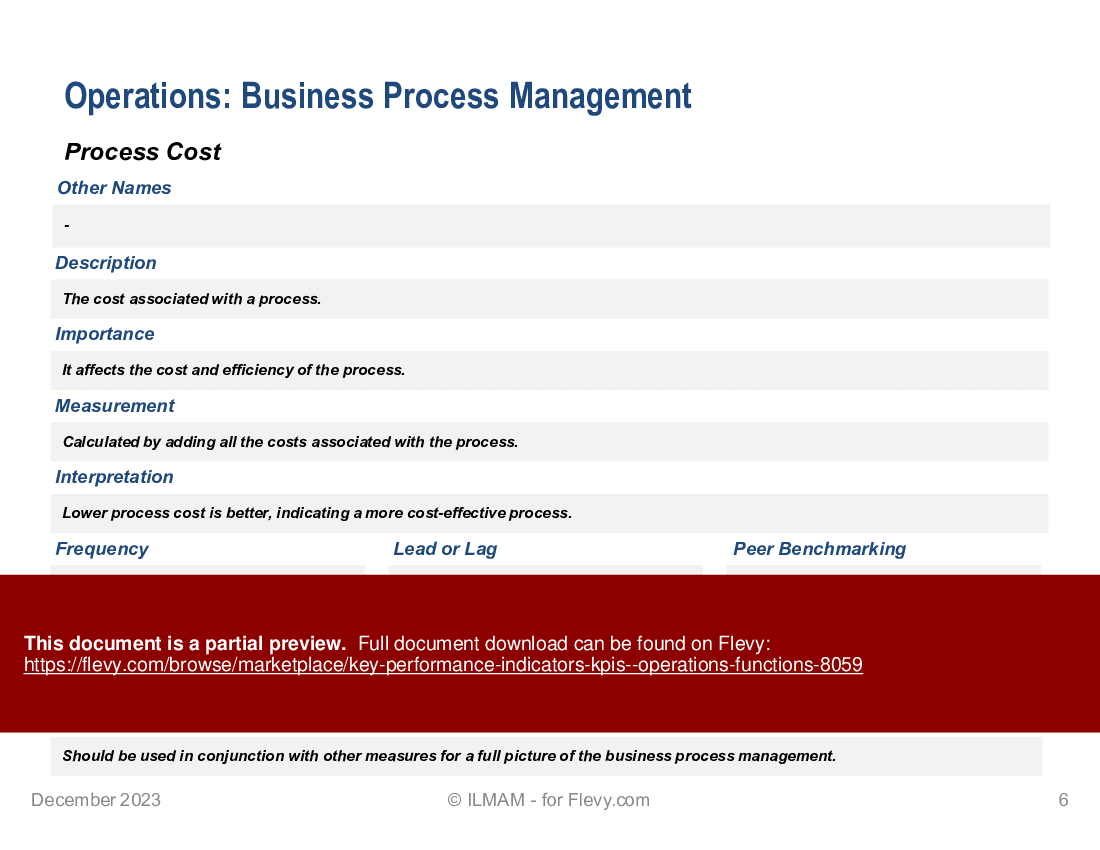
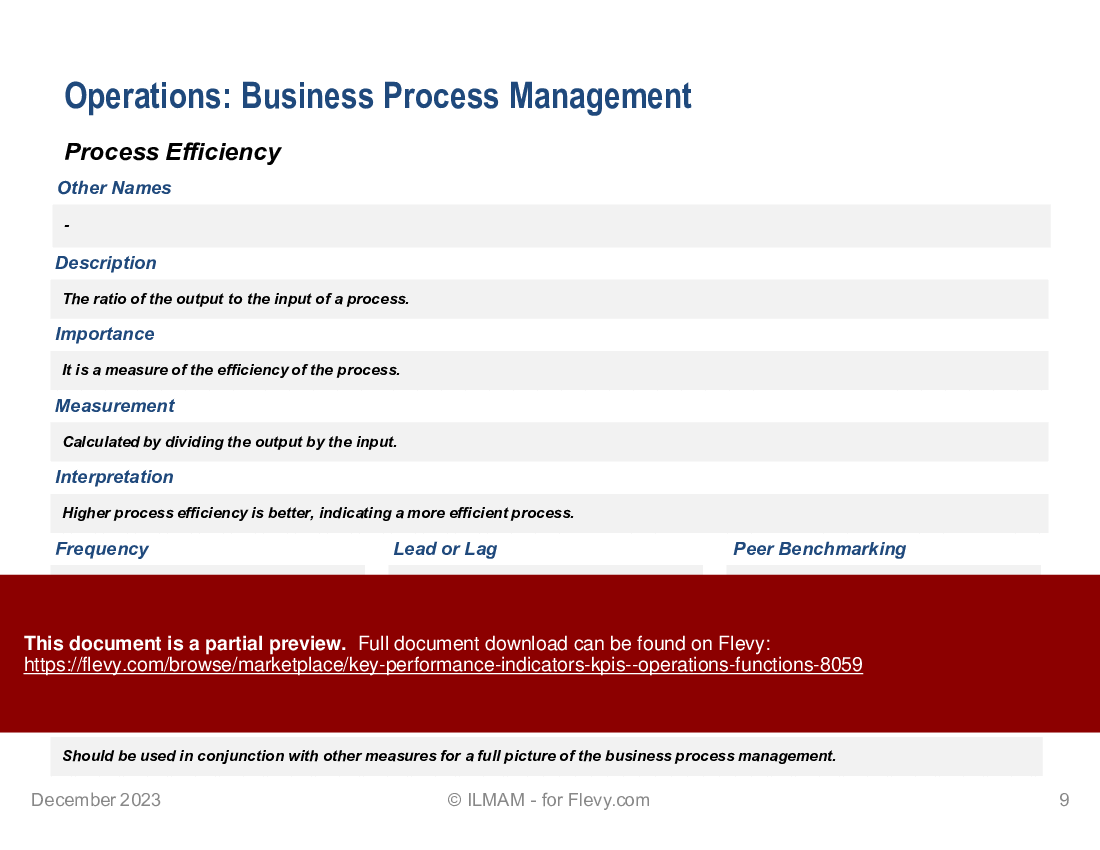
For each KPI listed, where relevant, the following elements are covered:
• The name of the function
• The name of the indicator, including common alternate names
• A brief description of the indicator and its importance
• Common measurement approach, interpretation, frequency, unit of measure and others
• Other information about the measure (e.g. suitability for peer bench marking, and others)

Got a question about the product? Email us at support@flevy.com or ask the author directly by using the "Ask the Author a Question" form. If you cannot view the preview above this document description, go here to view the large preview instead.

MARCUS OVERVIEW

This synopsis was written by Marcus [?] based on the analysis of the full 114-slide presentation.


Executive Summary
This presentation provides a detailed collection of over 100 Key Performance Indicators (KPIs) tailored for Operations functions, designed in a consulting-grade format reminiscent of MBB and Big 4 firms. The KPIs cover various operational areas, including Business Process Management, Continuous Improvement, Customer Service, Engineering, Facilities Management, Health and Safety, Manufacturing, Procurement, Project Management, and Quality Assurance/Control. This resource equips corporate executives and consultants with actionable insights to enhance performance management, align KPIs with strategic goals, and drive operational efficiency.

Who This Is For and When to Use
•  Operations executives seeking to implement effective performance management frameworks
•  Consultants advising organizations on KPI development and performance tracking
•  Business analysts focused on operational efficiency and process improvement
•  Project managers looking to align project outcomes with organizational goals
•  Quality assurance teams aiming to enhance product and service quality

Best-fit moments to use this deck:
•  During strategic planning sessions to define and align KPIs with business objectives
•  In performance review meetings to assess operational effectiveness and identify improvement areas
•  When developing training programs for teams on KPI measurement and management
•  For benchmarking against industry standards and best practices in operations

Learning Objectives
•  Define key operational KPIs relevant to various functions within the organization
•  Build a comprehensive KPI framework that aligns with strategic goals and operational needs
•  Establish a regular review process for KPIs to ensure relevance and accuracy
•  Identify actionable insights from KPI data to drive continuous improvement initiatives
•  Develop a balanced scorecard approach to performance management across operations
•  Implement effective tracking mechanisms for KPI measurement and reporting

Table of Contents
•  Introduction to KPIs (page 1)
•  Business Process Management (page 4)
•  Continuous Improvement / Lean Six Sigma (page 17)
•  Customer Service (page 30)
•  Engineering (page 43)
•  Facilities Management (page 51)
•  Health and Safety (page 59)
•  Manufacturing / Production (page 72)
•  Procurement (page 81)
•  Project Management (page 94)
•  Quality Assurance / Control (page 107)

Primary Topics Covered
•  Business Process Management - Focuses on KPIs that measure the efficiency and effectiveness of business processes, including automation and compliance metrics.
•  Continuous Improvement / Lean Six Sigma - KPIs that track the effectiveness of improvement initiatives, including cost of quality and cycle time metrics.
•  Customer Service - Metrics that assess customer satisfaction and service efficiency, such as Average Handle Time and Customer Satisfaction Score.
•  Engineering - KPIs that evaluate innovation and productivity in engineering processes, including R&D conversion rates and patent applications.
•  Facilities Management - Metrics that gauge the efficiency of facility operations, including energy consumption and maintenance costs.
•  Health and Safety - KPIs that monitor compliance with safety regulations and incident rates to ensure workplace safety.
•  Manufacturing / Production - Metrics that assess production efficiency and quality, including Overall Equipment Effectiveness and yield rates.
•  Procurement - KPIs that measure procurement efficiency and cost savings, including contract compliance and inventory turnover.
•  Project Management - Metrics that evaluate project performance, including cost variance and project success rates.
•  Quality Assurance / Control - KPIs that track product quality and compliance, including defect density and customer complaints.

Deliverables, Templates, and Tools
•  KPI framework template for various operational functions
•  Performance tracking dashboard for real-time KPI monitoring
•  Benchmarking report template for comparing KPIs against industry standards
•  Action plan template for addressing underperforming KPIs
•  Training materials for teams on KPI measurement and analysis
•  Regular review schedule template for KPI assessments

Slide Highlights
•  Overview of KPI importance in operations management
•  Visual representation of KPI categories and their interrelations
•  Case studies demonstrating successful KPI implementation
•  Charts illustrating KPI trends and performance over time
•  Best practices for KPI selection and measurement

Potential Workshop Agenda
KPI Development Workshop (90 minutes)
•  Discuss the importance of KPIs in operations
•  Identify key operational areas and relevant KPIs
•  Develop a draft KPI framework for the organization

KPI Review and Adjustment Session (60 minutes)
•  Analyze current KPI performance data
•  Identify underperforming KPIs and discuss corrective actions
•  Establish a regular review process for ongoing KPI management

Customization Guidance
•  Tailor KPI definitions to align with specific organizational goals and industry standards
•  Adjust measurement frequencies based on operational needs and data availability
•  Incorporate company-specific terminology and metrics into the KPI framework
•  Develop customized reporting formats to suit stakeholder preferences

Secondary Topics Covered
•  Data quality and its impact on KPI accuracy
•  The role of KPIs in strategic decision-making
•  Balancing quantitative and qualitative KPIs for a holistic view
•  Integration of KPIs into performance management systems
•  The importance of cross-functional collaboration in KPI development

Topic FAQ

What are the main categories of operational KPIs I should consider when designing a measurement system?

Operational KPI categories typically span Business Process Management, Continuous Improvement/Lean Six Sigma, Customer Service, Engineering, Facilities Management, Health & Safety, Manufacturing/Production, Procurement, Project Management, and Quality Assurance/Control. The Flevy deck organizes KPIs across these 10 categories to guide coverage and selection, totaling 10 categories.

How do lead and lag KPIs differ, and when should each be used in operations?

Lead KPIs are predictive measures used to anticipate future performance, while lag KPIs report past outcomes and results. Use lead KPIs to trigger corrective actions and lag KPIs for outcome validation; both should be part of regular reviews, typically on a monthly or quarterly cadence as noted in the guidance.

What information should I document for each KPI to ensure consistent measurement and interpretation?

Each KPI entry should include the function name, indicator name (and alternates), a brief description of importance, common measurement approach, interpretation guidance, frequency, unit of measure, and benchmarking suitability. The Key Performance Indicators (KPIs) | Operations Functions deck explicitly covers these elements for each KPI.

With limited resources, how should I prioritize which operational KPIs to focus on first?

Prioritize KPIs that directly map to strategic objectives, address current performance gaps, and are measurable with available data. Focus on a balanced mix of lead and lag indicators and use a scorecard to limit scope. The deck supports this with selection guidance and a balanced scorecard approach.

What templates or tools are typically included in an operational KPI toolkit I might purchase?

A practical KPI toolkit should include a KPI framework template, a performance tracking/dashboard template, a benchmarking report template, an action plan template, training materials, and a regular review schedule template. The Key Performance Indicators (KPIs) | Operations Functions presentation lists these deliverables (six core templates).

How can KPIs support Continuous Improvement or Lean Six Sigma initiatives in operations?

KPIs for Continuous Improvement/Lean Six Sigma track initiative effectiveness using measures such as cost of quality, cycle time, defect reduction, and improvement project outcomes. These metrics provide baselines and progress indicators to prioritize projects and validate results using specific metrics like cost of quality and cycle time.

What should a KPI review meeting agenda include to identify and address underperforming metrics?

A KPI review session should analyze current KPI performance data, identify underperforming indicators, discuss root causes, define corrective actions, and set a follow-up review cadence. The deck provides a sample KPI Review and Adjustment Session agenda structured for 60 minutes to cover these items.

Are paid KPI template decks worth the investment, and how should I evaluate their cost versus value?

Evaluate whether templates reduce setup time, provide adaptable measurement standards, and include reporting artifacts you can reuse. Check for practical deliverables like a KPI framework template and a performance tracking dashboard; the Key Performance Indicators (KPIs) | Operations Functions deck contains 100+ KPIs across a 114-slide presentation to assess fit.

Document FAQ
These are questions addressed within this presentation.

What are KPIs and why are they important?
KPIs are measurable values that demonstrate how effectively an organization is achieving key business objectives. They are essential for tracking performance and guiding strategic decisions.

How often should KPIs be reviewed?
KPIs should be reviewed regularly, typically on a monthly or quarterly basis, to ensure they remain relevant and aligned with organizational goals.

Can KPIs be customized for different departments?
Yes, KPIs can and should be customized to reflect the specific objectives and operational realities of different departments within an organization.

What is the difference between lead and lag KPIs?
Lead KPIs predict future performance and are proactive, while lag KPIs measure past performance and are reactive.

How can we ensure data quality for our KPIs?
Implementing robust data collection processes, regular audits, and training for staff on data entry can help ensure high data quality for KPI measurement.

What tools can be used for KPI tracking?
Various tools, including business intelligence software, dashboards, and spreadsheet applications, can be used for effective KPI tracking and reporting.

How do we determine which KPIs to focus on?
Selecting KPIs should be based on strategic objectives, operational priorities, and areas where performance improvement is needed.

What role do KPIs play in continuous improvement?
KPIs provide measurable benchmarks that help organizations identify areas for improvement and track progress over time.

Can KPIs be used for benchmarking against competitors?
Yes, KPIs can be used to benchmark performance against industry standards and competitors, providing insights into relative performance.

What is the best way to communicate KPI results to stakeholders?
Using clear visualizations, concise summaries, and actionable insights in reports or presentations can effectively communicate KPI results to stakeholders.

Glossary
•  KPI - Key Performance Indicator, a measurable value that demonstrates how effectively an organization is achieving key business objectives.
•  Lead KPI - A predictive measure that indicates future performance.
•  Lag KPI - A retrospective measure that reflects past performance.
•  Benchmarking - The process of comparing performance metrics to industry standards or competitors.
•  Data Quality - The accuracy and reliability of data used for KPI measurement.
•  Continuous Improvement - Ongoing efforts to improve products, services, or processes.
•  Performance Management - The systematic process of improving organizational performance.
•  Operational Efficiency - The ability to deliver products or services in the most cost-effective manner.
•  Stakeholder - An individual or group with an interest in the performance of an organization.
•  Dashboard - A visual display of key metrics and performance indicators.
•  Action Plan - A detailed proposal for achieving specific objectives.
•  Training Materials - Resources used to educate staff on processes or systems.
•  Compliance - Adherence to laws, regulations, and organizational policies.

Source: Best Practices in Key Performance Indicators, Customer Service, Continuous Improvement, BPM PowerPoint Slides: Key Performance Indicators (KPIs) | Operations Functions PowerPoint (PPTX) Presentation Slide Deck, ILMAM - Strategy & Management Consulting


$29.00
MBB/Big 4 style presentation that provides a collection of 100+ Key Performance Indicators (KPIs) related to the Operations functions.
Add to Cart
  

ABOUT THE AUTHOR

Additional documents from author: 29

ILMAM is a strategy and management consulting provider that specializes in:

•  Strategic management, including strategic planning and performance management

•  Strategy enablers, such as key business processes and governance

Select top quality guides and tools are offered through to enable you to perform work at your company or support your clients effectively and ... [read more]

Ask the Author a Question

You must be logged in to contact the author.

Click here to log in Click here register

Did you know?
The average daily rate of a McKinsey consultant is $6,625 (not including expenses). The average price of a Flevy document is $65.
Bundle and save! You can save up to % with bundles!

View bundle(s)

Need KPIs or benchmarks? Explore KPI Depot to access the most comprehensive database of KPI data, organized by function and industry.


Trusted by over 10,000+ Client Organizations
Since 2012, we have provided business templates to over 10,000 businesses and organizations of all sizes, from startups and small businesses to the Fortune 100, in over 130 countries.
AT&T GE Cisco Intel IBM Coke Dell Toyota HP Nike Samsung Microsoft Astrazeneca JP Morgan KPMG Walgreens Walmart 3M Kaiser Oracle SAP Google E&Y Volvo Bosch Merck Fedex Shell Amgen Eli Lilly Roche AIG Abbott Amazon PwC T-Mobile Broadcom Bayer Pearson Titleist ConEd Pfizer NTT Data Schwab


Read Customer Testimonials

 
"Flevy is our 'go to' resource for management material, at an affordable cost. The Flevy library is comprehensive and the content deep, and typically provides a great foundation for us to further develop and tailor our own service offer."

– Chris McCann, Founder at Resilient.World
 
"Flevy.com has proven to be an invaluable resource library to our Independent Management Consultancy, supporting and enabling us to better serve our enterprise clients.

The value derived from our [FlevyPro] subscription in terms of the business it has helped to gain far exceeds the investment made, making a subscription a no-brainer for any growing consultancy – or in-house strategy team."

– Dean Carlton, Chief Transformation Officer, Global Village Transformations Pty Ltd.
 
"FlevyPro has been a brilliant resource for me, as an independent growth consultant, to access a vast knowledge bank of presentations to support my work with clients. In terms of RoI, the value I received from the very first presentation I downloaded paid for my subscription many times over! The "

– Roderick Cameron, Founding Partner at SGFE Ltd
 
"As a niche strategic consulting firm, Flevy and FlevyPro frameworks and documents are an on-going reference to help us structure our findings and recommendations to our clients as well as improve their clarity, strength, and visual power. For us, it is an invaluable resource to increase our impact and value."

– David Coloma, Consulting Area Manager at Cynertia Consulting
 
"As an Independent Management Consultant, I find Flevy to add great value as a source of best practices, templates and information on new trends. Flevy has matured and the quality and quantity of the library is excellent. Lastly the price charged is reasonable, creating a win-win value for "

– Jim Schoen, Principal at FRC Group
 
"Flevy is now a part of my business routine. I visit Flevy at least 3 times each month.

Flevy has become my preferred learning source, because what it provides is practical, current, and useful in this era where the business world is being rewritten.

In today's environment where there are so "

– Omar Hernán Montes Parra, CEO at Quantum SFE
 
"One of the great discoveries that I have made for my business is the Flevy library of training materials.

As a Lean Transformation Expert, I am always making presentations to clients on a variety of topics: Training, Transformation, Total Productive Maintenance, Culture, Coaching, Tools, Leadership Behavior, etc. Flevy "

– Ed Kemmerling, Senior Lean Transformation Expert at PMG
 
"I have used Flevy services for a number of years and have never, ever been disappointed. As a matter of fact, David and his team continue, time after time, to impress me with their willingness to assist and in the real sense of the word. I have concluded in fact "

– Roberto Pelliccia, Senior Executive in International Hospitality


Save with Bundles

This document is available as part of the following discounted bundle(s):


Customers Also Bought These Documents


Customers Also Like These Documents

Explore Templates on Related Management Topics


Your Recently Viewed Documents
Download our FREE Strategy & Transformation Framework Templates

Download our free compilation of 50+ Strategy & Transformation slides and templates. Frameworks include McKinsey 7-S, Balanced Scorecard, Disruptive Innovation, BCG Curve, and many more.








